
Anasayfa / Blog
In plastic packaging production, raw material is the largest item in total production costs. Minimising sheet scrap and defective products in thermoforming processes is therefore not only important for environmental sustainability but also a critical necessity for profitability. Advances in machine technology are bringing scrap rates close to zero and increasing the competitiveness of industrial plants.
Large Mould Areas and Optimal Nesting The most fundamental factor determining the scrap rate is how products are laid out on the plastic sheet. Extra-large mould areas such as 1020×720 mm or 1300×1200 mm on modern thermoforming machines allow engineers to optimise nesting much more efficiently. By minimising the web between products formed across a large area, significant savings are achieved on edge scrap.
Servo-Driven Millimetric Pitch Accuracy Small slips as the sheet advances through the machine cause the mould or cutting knives to strike the wrong points, resulting in rejected products. The fully automated servo motor technology used in new-generation thermoforming lines offers a flawless pitch accuracy of 0.15 mm. This millimetric indexing allows products to be positioned as close together as possible, definitively preventing material waste.
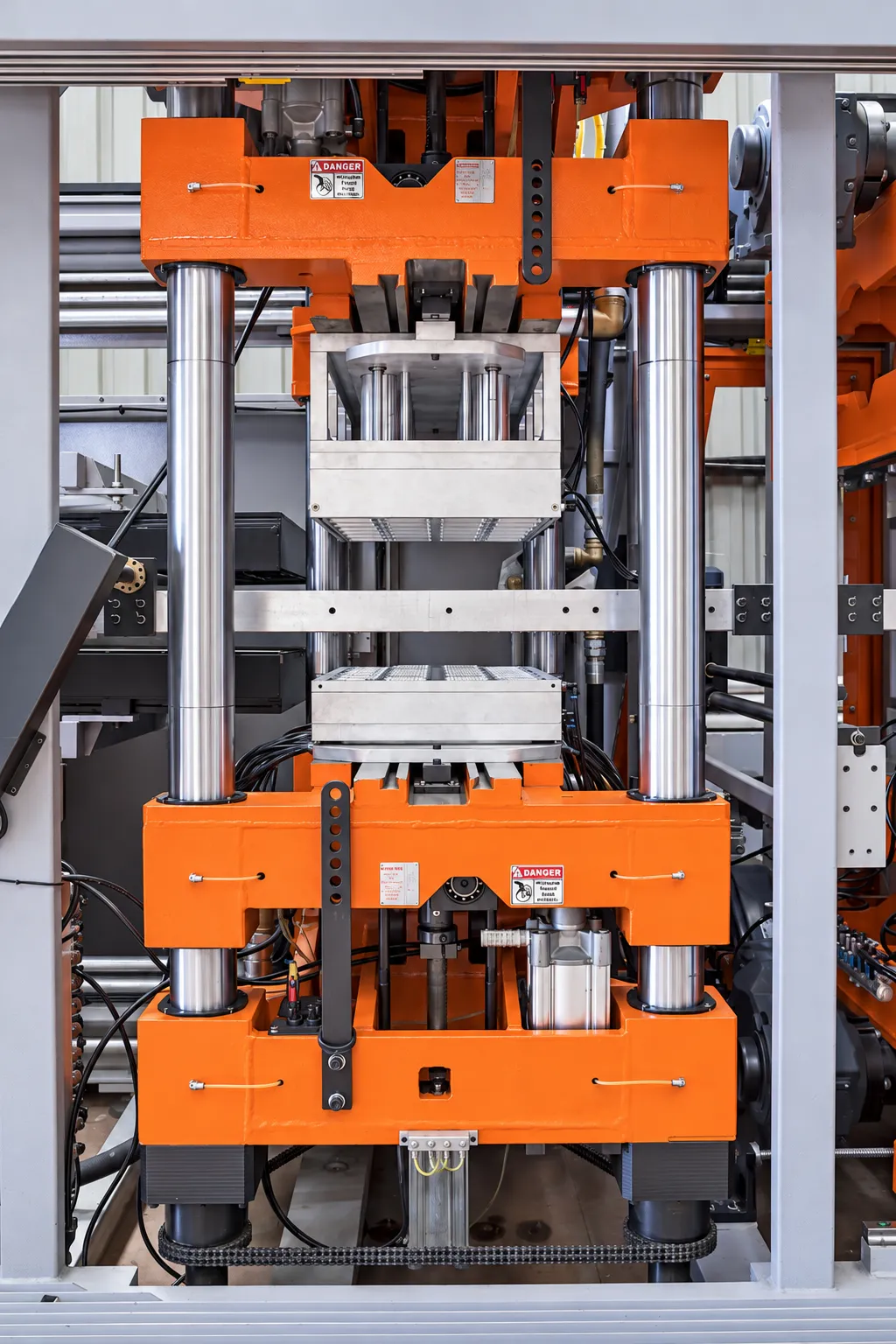
High-Tonnage Cutting and Standalone Trim Presses The quality of the cutting process after forming is vital for a scrap-free final product. Standalone trim presses with enormous clamping forces such as 120,000 daN (decanewton) deliver a smooth cut even on the thickest sheets (2 mm plastic or 5 mm foam) without leaving burrs or tears on product edges. A clean cut eliminates product rejection and brings rework costs down to zero.
Integrated Scrap Removal and Recycling Systems The skeleton scrap (edge trim) that inevitably occurs on a production line must be recovered immediately. Automatic scrap winders or granulator conveyors integrated right after the cutting station carry waste material hands-free directly to granulating machines. Thanks to this closed-loop system, scrap is sent straight back into new sheet production without contaminating the raw material or losing labour time.
Homogeneous Heating and Thickness Control If the plastic sheet is not heated evenly before forming, some areas of the product end up too thin (weak corner deformation) and fail quality control. High-capacity homogeneous heating systems, where upper and lower heaters are controlled in independent zones, achieve the same wall thickness at every point of the material and completely eliminate scrap caused by structural defects.